
Cortlandt Resident Lookup Coverage
No single index identifies every Cortlandt resident. The most reliable starting point depends on the question. The Town’s current property-card route is useful when an address is known, while the New York voter form verifies a matching registration under its own criteria. Public civil filings belong in NYSCEF, and a local Town Justice Court matter belongs with the clerk because no public local party-name portal was found. Each source has a different date and legal meaning.
| Record | What it can confirm | Custodian or search | Access route |
|---|---|---|---|
| Current property card | Tax owner, mailing category, transfer information | Cortlandt Property Data Search | Current CAI card; owner is not automatically an occupant |
| Voter verification | Matching registration or polling information | New York voter lookup | Use the official form; confidential registrations are protected |
| Public civil case search | A party or attorney name in public e-filed cases | NYSCEF | Guest search; sealed, restricted, older, and local files may be absent |
| Vital event request | Genealogy copy when statutory conditions are met | Cortlandt Registrar or NYSDOH | Not a general certified-name lookup |
| License verification | Public credential, status, and discipline summary where displayed | NYSED Office of the Professions | Choose the correct profession and preserve role labels |
Begin with a dated record that connects the person to Cortlandt, then use a second independent source. The Town’s property card and a recorded deed can support an ownership trail. They do not establish that someone currently lives there. For a historical name, a directory, census record, or newspaper notice may be a better date match than a modern portal.
Cortlandt Names Need Normalizing
Search the name as it appears on the record first. Then try a middle initial, suffix, apostrophe, hyphen, and spacing variant one at a time. This matters in Cortlandt research because different systems index different name formats. The New York professional-license search requires a chosen profession and uses a last name of at least three letters; its guidance uses last first with a space rather than a comma. The Department of State and UCC rules also treat normalized names differently.
Keep a small research log with the exact spelling, URL, search date, location, and record date. A result tied to a business filing, professional record, or tax mailing address must retain that role label. Those addresses can be service, practice, or correspondence locations and should not be converted into a home address.
Note: A same-name result is a lead, not an identification, until place and date agree across independent records.
Cortlandt Court Lookup Checks
NYSCEF’s public case search has separate case-identifier, name, Tax Cert/SCAR, and new-case modes. In a name search, choose Party or Attorney, then enter the available first, middle, or last name. County can narrow a result, and the filing dates can narrow the case search. The public help materials say guest search needs no account, but they also distinguish public documents from sealed, restricted, and secure material.
| Name Type | Choose Party or Attorney before running a name search. |
|---|---|
| Name fields | Business/organization, first, middle, and last name fields appear; minimum characters apply to some fields. |
| County and court | Use them to narrow when the public form offers the appropriate option. |
| Tax Cert/SCAR | This separate mode requires block and lot fields, rather than a person’s name. |
The results screen was not inspected with a live query, so no universal result-field list belongs here. A missing NYSCEF hit is not proof that a local case never existed. The Cortlandt Town Court clerk holds local files and can explain what is public, sealed, or available for copying. Give the clerk the exact name, variant spelling, approximate date, and case category.
Cortlandt Genealogy Time Rules
Cortlandt’s local Registrar maintains births, deaths, and marriages beginning in 1881. For an uncertified genealogy copy, New York’s thresholds are a birth record at least 75 years old with the person known deceased, a death record at least 50 years old, or a marriage record at least 50 years old with both spouses known deceased. A direct-line descendant can seek a waiver by supplying the required relationship and death proof.
The state genealogy application is the form the Town directs applicants to use for a local event. The Town reports roughly one month of processing, while the statewide route estimates eight months or longer. The state’s standard genealogy search is $22 for one to three years and may yield an uncertified copy or a no-record response. Confirm local payment instructions with the Registrar rather than assuming the state fee applies locally.
Those 75/50/50 rules are a useful date test. They do not make certified copies open to the public. Certified access remains controlled by Public Health Law and the requester’s legal category.
Verify a Cortlandt Resident Lookup
A careful resident lookup builds a timeline instead of one composite profile. A current transfer, an older registration, a historic directory line, and a vital event all describe different moments. Verify the municipality, too. Cortlandt Manor, a village address, Peekskill, and a postal ZIP can point to different custodians. Use the Town’s parcel and boundary tools before attaching a person to the Town of Cortlandt.
- Record the name exactly, including any middle initial, suffix, apostrophe, or hyphen, and note the source date.
- Anchor the person with a property card, recorded conveyance, voter verification, court record, or dated historical source.
- Check a second record type that fits the same place and period. Treat an ownership record as title evidence, not proof of current residence.
- Preserve the URL, search date, parcel or record reference, office, and access status. When a legal point matters, request the image or certified copy from the custodian.
- Docket
- The court’s organized case record. Public access can be limited even when a case number exists.
- Index and image
- An index helps locate a record; an image is the scanned document or page. Access rules and fees may differ.
- Certified copy
- A copy issued by the official custodian with the certification needed when an official record is required.
Cortlandt Resident Registry Checks
State custody and registry tools must be read within their own jurisdiction. The New York DOCCS lookup searches by DIN or name. Its name form accepts first, middle, and last name plus race, age, and sex. A state result does not establish a Cortlandt connection.
The source describes this limited result inventory:
- Name and DIN or register number
- Age, race, and sex
- Release date and location
- Date-of-information notice for a changing database
Read every field with the displayed date notice. A result can change and does not answer questions that belong to a town court or county custodian.
The official DOCCS search screen below shows the DIN and name-search route. It is useful for understanding the limited public form, not for treating a result as permanent.
Open the official New York DOCCS lookup before relying on the screen.
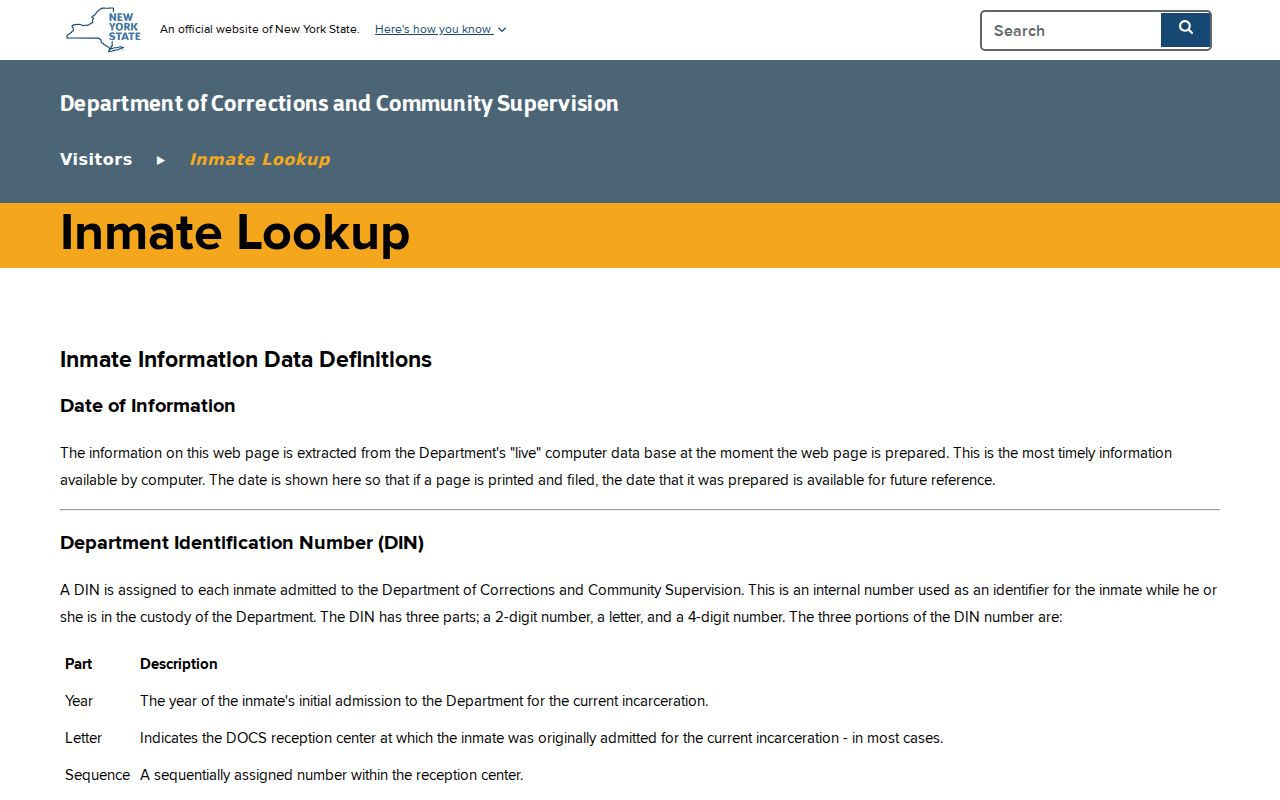
Use a DIN only when it is already lawfully known. An absent result does not establish release, non-custody, or the absence of a local court or county record.
The New York public registry allows one search field at a time: last name, county, or ZIP. Public web results cover only the levels the state makes available online and include custody-status filters and CAPTCHA. It is not a general resident-finding tool.
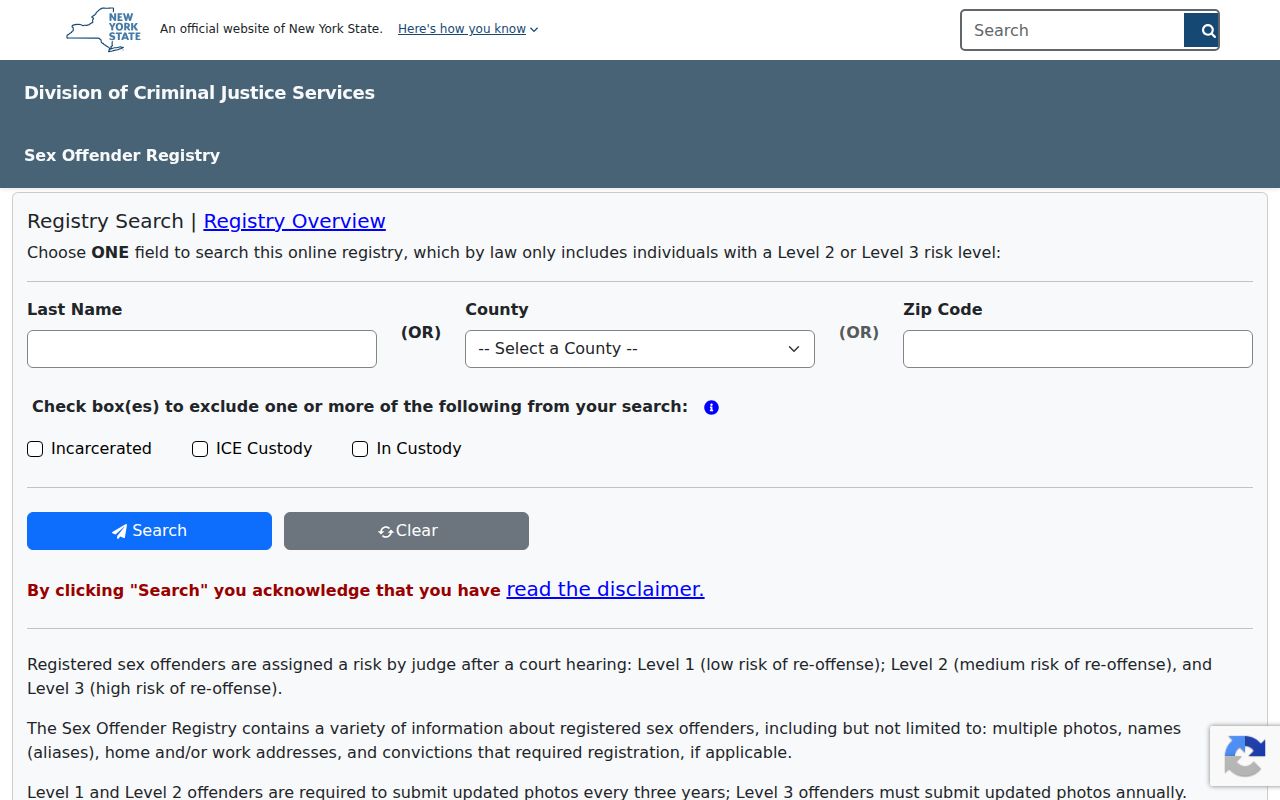
Check the state’s displayed restrictions and date notice every time. The public source controls what may be searched and what may be disclosed.
Cortlandt Record Roles, Not Residences
New York’s business-entity database can show an entity’s current name, organization date, jurisdiction, county, service-of-process address, registered agent, status, and available filing history. The professional verification service can show the credentialed person’s name, city and state, profession, license number, licensure date, registration status, and discipline summary. Both can clarify a public role without identifying a person’s private residence.
The NYSED Office of the Professions verification search begins by selecting the profession, then searches by a qualifying last name, license number, or location where the form offers that route.
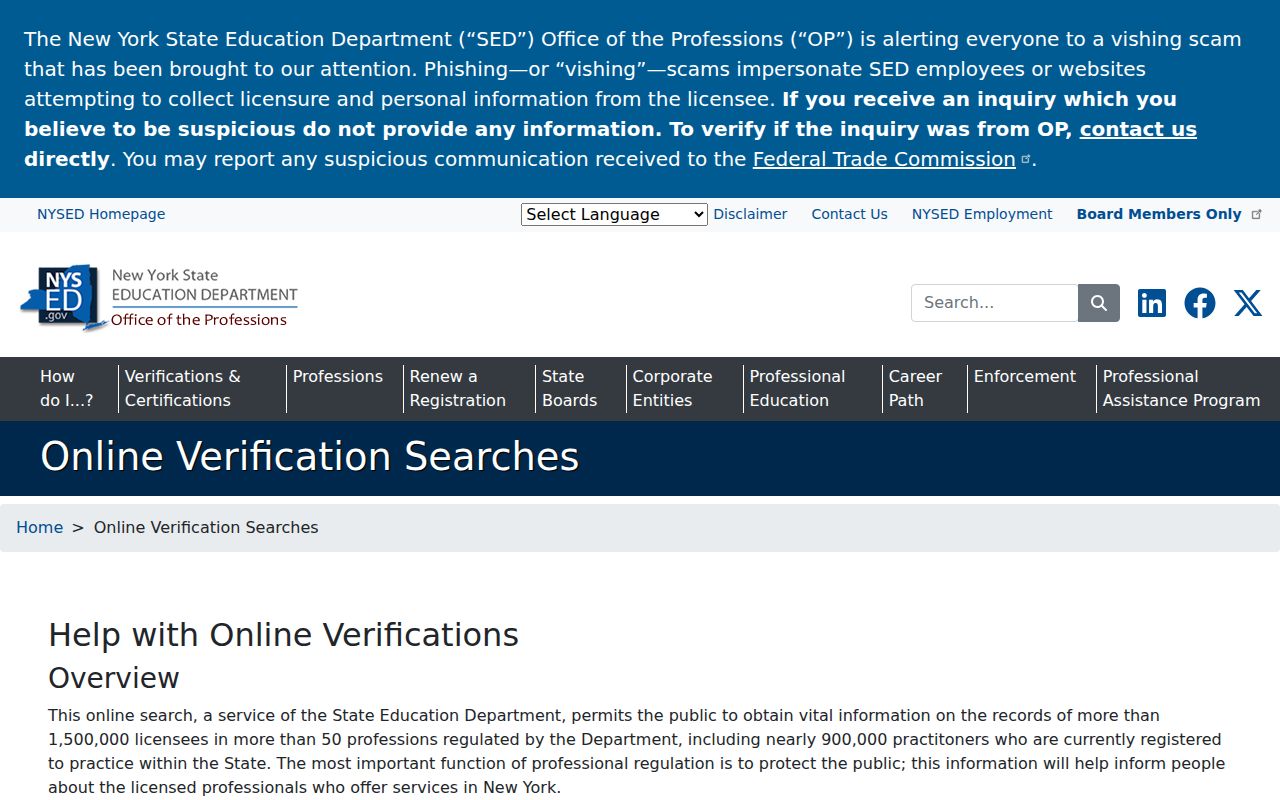
The verification controls help distinguish a professional credential or practice location from a private home address. Keep the displayed role and record date attached to any research note.
For a regulated trade, use the appropriate Westchester portal rather than stretching an unrelated record into a resident match. Preserve the role, status, and date exactly as shown. The search must match the portal’s stated purpose and field rules.
Cortlandt Resident Lookup Limits
New York makes some records accessible while protecting others. The Address Confidentiality Program supplies eligible participants a substitute mailing address; the actual address is protected. Confidential voter registration has a separate Board of Elections process. Voter records omit protected identifiers, court files may be sealed or redacted, and vital records have statutory confidentiality rules. A public-facing index is not permission to republish sensitive identifiers.
For an existing Town administrative record, New York FOIL requires a reasonably described request and ordinarily requires an agency to grant, deny, or acknowledge it within five business days. It does not require an agency to create a new database or override a statutory restriction. State FOIL guidance and the custodian’s own procedure are the correct fallback when an online tool cannot answer a narrow records question.
Lawful use. Use Cortlandt records for personal, lawful research and treat protected addresses, sealed files, and sensitive facts with care. Repeated unwanted contact, threats, intimidation, or harassment can trigger serious legal consequences.
Note: When a record appears wrong, seek correction or clarification from the office that holds it rather than spreading the error.